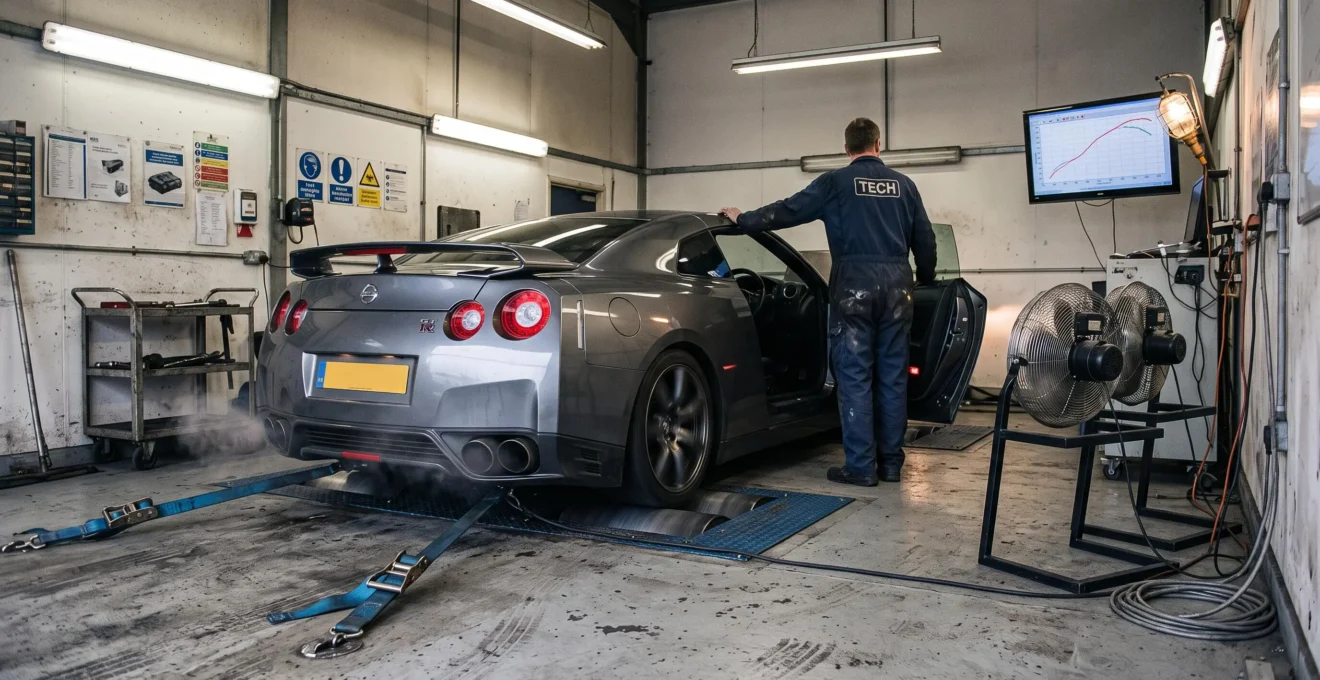
Engine power determines how quickly a vehicle can perform work, but the horsepower printed on a specification sheet tells only part of the story. A car with impressive peak horsepower may feel sluggish in traffic, while a lighter vehicle with less power can respond more quickly during everyday acceleration.
The difference comes down to how an engine generates torque, where it produces its power, how effectively the transmission delivers that power, and how much weight the vehicle must move. Turbocharging, engine design, operating temperature, and mechanical condition also influence how much performance is actually available.
For most drivers, the right amount of power is not necessarily the highest available figure. It is enough accessible power to accelerate confidently, merge safely when road conditions permit, carry the usual load, and maintain the desired cruising speed without excessive effort. Understanding the relationship between horsepower, torque, vehicle weight, and driving conditions makes it easier to compare vehicles without paying for performance that rarely gets used.
Engine power: The essentials
- Horsepower describes an engine’s maximum rate of work, but torque delivery, gearing, and engine speed determine how accessible that performance feels.
- Power-to-weight ratio is a useful starting point when comparing acceleration potential, provided vehicle weights are measured consistently.
- Daily driving generally benefits from a broad, usable power band, while maintenance and proper warm-up help preserve performance over time.
- What Does Engine Power Output Actually Tell You About How a Car Will Perform?
- Why Can Two Engines of the Same Size Produce Very Different Power?
- How Should You Compare Horsepower With Vehicle Weight Before Buying?
- Peak Horsepower or Low-RPM Pull: Which Matters More for Daily Driving?
- What Can Go Wrong When You Use Full Engine Power While the Engine Is Cold?
- Which Components Commonly Fail When Engine Power Is Increased Too Aggressively?
- Why Do Worn Spark Plugs Often Misfire During Acceleration?
- How Can You Maintain Strong Engine Performance After 100,000 Miles?
What Does Engine Power Output Actually Tell You About How a Car Will Perform?
Engine power output indicates the maximum rate at which an engine can deliver mechanical work under defined operating conditions. It helps describe acceleration potential and high-speed performance, but it does not establish how quickly a complete vehicle will accelerate. Vehicle weight, torque delivery, transmission gearing, traction, and drivetrain efficiency all affect the result.
Advertised horsepower generally refers to peak engine output measured at the crankshaft rather than at the wheels. The figure represents the highest point on the engine’s power curve, usually at a specified engine speed measured in revolutions per minute (RPM). It does not mean the engine produces that much power during ordinary cruising.
The SAE J1349 engine power measurement standard provides a repeatable method for measuring installed net engine power and torque. Its purpose is to reflect representative engine performance under standardized conditions. However, not every advertised rating worldwide necessarily follows this particular standard.
Three measurements help explain what a power rating actually means:
- Brake horsepower (bhp): Engine power measured at the crankshaft or engine output shaft, before drivetrain losses. Terminology and reporting conventions vary by market.
- Wheel horsepower (whp): Power delivered to the driven wheels, typically estimated using a chassis dynamometer. Results can vary with equipment and testing conditions.
- Torque: The rotational force generated by the engine. Combined with RPM, it determines power output and helps explain the engine’s operating characteristics.
Mechanical power is proportional to torque multiplied by rotational speed. Consequently, an engine can produce substantial power at high RPM without delivering especially strong torque at low RPM.
A useful specification-sheet check is to identify whether the advertised figure describes crankshaft or wheel power, note the RPM at which peak horsepower occurs, and examine how broadly power is available across the rev range.
Consider two hypothetical engines. One produces its maximum horsepower only near redline, while another delivers slightly less peak power across a much broader RPM range. The second may respond more readily during routine driving without requiring frequent downshifts. The first may perform better when operated near maximum engine speed.
Horsepower is therefore a measure of capability rather than a complete prediction of driving experience. Engine architecture and calibration explain why similar-looking specifications can conceal very different performance characteristics.
Why Can Two Engines of the Same Size Produce Very Different Power?
Two engines with identical displacement can produce very different horsepower because displacement measures cylinder volume, not how efficiently the engine processes air and fuel. Airflow, compression, combustion efficiency, turbocharging, engine speed, and electronic calibration all influence output. Engine size is therefore only one factor in determining how much power an engine can generate.
Displacement describes the combined swept volume of an engine’s cylinders. A larger displacement provides more potential capacity for processing an air-fuel charge, but actual output depends on how effectively the engine fills, burns, and expels that charge.
Engineers can increase power through several approaches:
- Improved airflow: Intake design, valve timing, cylinder-head geometry, and exhaust flow can increase the amount of air processed by the engine.
- Higher compression: Suitable compression ratios can improve thermal efficiency, although fuel knock resistance, combustion design, and operating temperatures impose limits.
- Forced induction: Turbochargers and superchargers increase intake air density, allowing more fuel to be burned while maintaining the intended air-fuel mixture.
- Fuel and ignition calibration: Injection timing, ignition timing, and engine management influence combustion stability, emissions, efficiency, and output.
- Higher operating RPM: An engine capable of maintaining effective airflow at higher speeds can generate more horsepower even without a major increase in peak torque.
This explains why a modern turbocharged engine can match or exceed the horsepower of a larger naturally aspirated engine. The U.S. Department of Energy notes in its vehicle rightsizing guidance that smaller engines can sometimes produce nearly the same horsepower as larger alternatives. Its guidance also emphasizes gearing and intended operating requirements.
Engine calibration adds another important distinction. Manufacturers may offer different output versions within the same engine family, sometimes using different boost targets, cooling arrangements, hardware specifications, or software settings.
A higher-output version does not automatically have a shorter service life. However, it may require higher-octane fuel, different maintenance provisions, or more expensive supporting components. Comparing the complete engine specification and manufacturer requirements is more informative than assuming identical displacement means identical ownership costs.
Peak torque and horsepower RPM provide useful clues about engine character. An engine producing substantial torque across a wide, relatively low RPM range may emphasize everyday flexibility. Another reaching peak horsepower near its upper operating limit may prioritize high-speed output.
These design differences establish what the engine can produce. Whether that output feels sufficient also depends on the mass it must accelerate.
How Should You Compare Horsepower With Vehicle Weight Before Buying?
Compare horsepower and vehicle weight using the power-to-weight ratio, which expresses how much engine power is available for each unit of vehicle mass. A higher ratio generally indicates stronger acceleration potential, assuming comparable traction and drivetrain characteristics. It is more informative than horsepower alone, but gearing, torque delivery, and actual loaded weight must also be considered.
The simplest calculation divides advertised horsepower by vehicle weight in tonnes. Alternatively, divide vehicle weight in pounds by horsepower to find how many pounds each horsepower must move.
Power-to-weight ratio = horsepower ÷ vehicle weight in metric tonnes.
For a hypothetical comparison, consider two vehicles with the following specifications:
| Specification | Car A | Car B |
|---|---|---|
| Engine output | 150 hp | 200 hp |
| Curb weight | 1,200 kg | 1,700 kg |
| Power-to-weight ratio | 125 hp/tonne | Approximately 118 hp/tonne |
| Weight per horsepower | 8 kg/hp | 8.5 kg/hp |
| Initial comparison | Higher power relative to weight | Higher absolute horsepower |
Although Car B produces more horsepower, Car A has the higher power-to-weight ratio. That suggests Car A could have a performance advantage in some acceleration situations, but the figures cannot establish which vehicle is faster without additional information.
Vehicle mass influences the energy required to accelerate. Reducing weight can therefore improve acceleration potential even without increasing engine output. However, the effect depends on speed, traction, rolling resistance, and driving conditions.
Power-to-weight ratio has limitations. Transmission ratios determine the multiplication of engine torque at the wheels, while gear spacing and shift behavior influence how effectively the engine stays within its useful power band. Driven-wheel traction can also limit acceleration, particularly from a standstill.
Published vehicle weights require careful interpretation. Depending on the market and reporting standard, curb or kerb weight may include different allowances for fluids, fuel, standard equipment, or driver mass. Optional equipment can change the figure further.
When comparing vehicles, use equivalent weight definitions and account for typical occupants and cargo. Additional load can make a noticeable difference in smaller, lighter vehicles.
Five checks before choosing a car based on engine power
- Record each vehicle’s advertised horsepower and the RPM at which it peaks. Deliverable: a two-column power comparison.
- Find the curb or kerb weight and note which measurement convention is used. Deliverable: comparable weight figures with their definitions.
- Calculate horsepower per metric tonne for each vehicle. Deliverable: two calculated power-to-weight ratios.
- Check the torque range, transmission type, and available acceleration test results. Deliverable: a shortlist of performance differences not explained by horsepower alone.
- Arrange a test drive with representative passengers or cargo where permitted, and assess merging, low-speed response, and comfortable cruising. Deliverable: written observations under comparable driving conditions.
Power-to-weight ratio narrows the comparison, but it does not describe how much effort the driver needs to access that power. The shape of the torque curve becomes especially important during ordinary driving.
Peak Horsepower or Low-RPM Pull: Which Matters More for Daily Driving?
Low-RPM pull usually matters more for effortless daily driving because it determines how readily an engine responds within commonly used engine speeds. Peak horsepower becomes more important during sustained hard acceleration and higher-speed performance. The best balance depends on driving conditions, vehicle weight, and how effectively the transmission keeps the engine in its useful operating range.
Peak horsepower describes the engine’s maximum rate of delivering mechanical work. Low-RPM pull refers to the ability to generate useful driving force without needing to reach high engine speeds. It is closely related to torque availability and transmission gearing.
An engine with a broad torque plateau can provide strong responsiveness across several engine speeds. A high-revving engine may require a downshift and greater RPM before delivering comparable acceleration.
The usable power band is the range over which the engine supplies sufficient performance for the intended task. A broad power band generally makes a vehicle easier to drive without frequent shifting.
Different driving situations change the preferred balance:
| Driving situation | Useful characteristic | Why it matters |
|---|---|---|
| Stop-and-go city traffic | Accessible low-RPM torque | Supports responsive acceleration without frequent high-RPM operation. |
| Highway merging | Broad usable power and suitable gearing | Helps the vehicle accelerate through the required speed range. |
| Towing or carrying heavy loads | Sustained torque delivery, appropriate gearing and cooling | Supports operation under increased load within vehicle ratings. |
| Spirited driving | Strong midrange and high-RPM power | Provides greater acceleration capability when the engine is kept in its performance range. |
Transmission design can substantially change the experience. A conventional automatic may downshift to access stronger engine output, while a continuously variable transmission can adjust its ratio to keep the engine near an advantageous operating speed.
Consequently, a relatively high-revving engine may feel responsive with a well-matched automatic transmission but require more deliberate shifting with a manual gearbox. Conversely, strong engine torque does not guarantee strong wheel torque in every gear.
A practical comparison involves examining peak torque RPM, the breadth of the torque plateau, peak horsepower RPM, and transmission behavior. During a test drive, assess response at ordinary cruising speeds and whether acceleration requires frequent or disruptive downshifts.
An engine that delivers sufficient power without constant high-RPM operation may be the more suitable choice for commuting. Preserving that responsiveness also requires avoiding unnecessary mechanical stress, especially before the engine reaches operating temperature.
What Can Go Wrong When You Use Full Engine Power While the Engine Is Cold?
Using full engine power before the engine has warmed sufficiently can increase mechanical stress and wear risk. Cold oil behaves differently from oil at operating temperature, while pistons, bearings, and other components have not reached their normal thermal dimensions. Heavy acceleration adds load during this transitional period, making gentle driving a better approach for most modern engines.
Engine components are designed around particular operating conditions, including oil viscosity, component clearances, temperature, and lubrication requirements. These conditions change after startup as the engine warms.
Cold oil can still circulate and provide lubrication, but its flow characteristics differ from those at normal operating temperature. Oil pressure may rise quickly after starting, yet adequate pressure does not necessarily mean every component and lubricant has reached its normal thermal state.
Meanwhile, pistons, cylinders, and other metal components expand as their temperatures increase. Applying high combustion pressure and engine speed before thermal stabilization can increase loading on moving surfaces.
Cold engine condition is not determined by outside temperature alone. A vehicle parked overnight in mild weather may still have relatively cold engine oil. Coolant temperature also does not perfectly represent oil temperature, which can take longer to stabilize.
Extended stationary idling is generally unnecessary for warming a modern fuel-injected engine. AAA‘s advice on engine warm-up before driving recommends a brief initial idle period followed by gentle driving, while avoiding hard acceleration during warm-up.
“To warm up your car faster, drive it gently and avoid hard acceleration. This also reduces wear and tear.”
Gentle driving puts the engine under moderate, controlled load, helping the engine and associated systems warm during normal operation. Prolonged idling consumes fuel and may keep some components below their usual operating temperatures for longer. Individual manufacturer recommendations and extreme-weather requirements take precedence.
Turbocharged engines warrant particular attention because the turbocharger operates at high rotational speeds and depends on suitable lubrication and heat management. Avoid demanding maximum boost immediately after a cold start.
After sustained hard driving, especially following heavy turbocharger use, follow the manufacturer’s shutdown guidance. Where appropriate, a period of light-load driving before stopping can help reduce operating temperatures. A fixed idling period is not universally necessary because turbocharger designs and cooling systems differ.
A practical routine is to start the engine, allow a brief moment for normal operation, drive smoothly, and postpone full-throttle acceleration until the engine is sufficiently warm. Use an oil-temperature display where available and follow vehicle-specific instructions.
Normal warm-up habits preserve existing mechanical margins. Modifying an engine to exceed its original output can reduce those margins even when operating temperatures are normal.
Which Components Commonly Fail When Engine Power Is Increased Too Aggressively?
Aggressive power increases can expose weaknesses in the clutch, transmission, driveline, cooling system, fuel delivery, pistons, connecting rods, and cylinder-head sealing. The first component to fail depends on the engine platform, modification method, torque increase, and operating conditions. Higher output is not automatically destructive, but exceeding the original design margins raises mechanical and thermal demands.
Increasing horsepower or torque changes the loads experienced by components throughout the powertrain. Manufacturers typically design engines and drivetrains with margins for heat, repeated loading, manufacturing variation, and expected operating conditions.
Modification can consume some of that headroom, especially when software changes increase turbocharger boost or combustion pressure without corresponding supporting upgrades.
The following is a practical inspection sequence, not a universal ranking of failure rates:
- Clutch and driveline: Increased torque may cause clutch slip or overload transmission gears, driveshafts, joints, and differentials. These components can become limiting factors even while the engine itself remains mechanically sound.
- Cooling system: Greater sustained output generally increases heat-management demands. Inadequate radiator, intercooler, or cooling-system capacity can lead to elevated temperatures and reduced performance.
- Fuel delivery: Insufficient fuel-system capacity or inappropriate calibration can prevent the engine from maintaining the intended mixture under high load, increasing the risk of abnormal combustion or component damage.
- Pistons and connecting rods: Elevated cylinder pressures and temperatures can exceed the structural or thermal margins of internal engine components.
- Head gasket and cylinder-head sealing: Excessive cylinder pressure, overheating, or mechanical distortion can compromise sealing between the engine block and cylinder head.
The weak link varies. A turbocharged engine may reach substantially higher cylinder pressures after a boost increase, while a naturally aspirated engine modified for higher RPM may encounter different valvetrain, lubrication, or rotating-assembly limitations.
The supporting-systems principle is essential: an engine needs sufficient cooling, lubrication, fuel supply, and drivetrain capacity to support its intended output. Increasing power without checking these systems can shift operation toward the edge of their safe working margins.
Warning signs include repeated heat-related performance reduction, unusually high oil or coolant temperatures, clutch slipping, abnormal combustion noises, and inconsistent acceleration under load. Some dangerous conditions may not produce obvious symptoms, so appropriate diagnostic monitoring matters.
More power also creates ownership considerations beyond component durability. Warranty implications, insurance notification requirements, roadworthiness rules, and emissions compliance vary between countries, insurers, manufacturers, and modification types.
Before modifying a road vehicle, verify local requirements and obtain a platform-specific assessment from a qualified specialist. An engine’s ability to produce a higher output briefly does not establish long-term reliability at that level.
Reliability depends on keeping every supporting system within suitable limits. Even an otherwise standard engine can lose usable output when a relatively inexpensive ignition component begins to deteriorate.
Why Do Worn Spark Plugs Often Misfire During Acceleration?
Worn spark plugs often misfire during acceleration because higher engine load increases combustion-chamber pressure, making the spark more difficult to generate reliably. Electrode wear can enlarge the spark gap and increase the voltage required for ignition. A plug that works adequately at idle may therefore fail when acceleration demands greater cylinder pressure and stronger ignition performance.
A spark plug must create an electrical discharge across the gap between its electrodes. This discharge initiates combustion of the compressed air-fuel mixture inside a gasoline engine’s cylinder.
As electrodes wear, their shape and gap can change. A larger gap generally requires greater ignition voltage. During acceleration, increased cylinder filling and pressure can further increase the demands placed on the ignition system.
NGK‘s technical explanation of spark plug gapping establishes this relationship between electrode separation and required ignition voltage. The manufacturer also explains why higher-compression and forced-induction applications require particular attention to reliable ignition.
When the ignition system cannot consistently generate the required spark, combustion may fail in one or more cylinders. The driver can experience hesitation, jerking, rough acceleration, or reduced engine performance.
A misfire can also allow unburned fuel to enter the exhaust system. Persistent misfiring may overheat and damage the catalytic converter, making prompt diagnosis important. If the check-engine light flashes, reduce load, stop driving as soon as safely possible, and follow the manufacturer’s instructions for obtaining assistance.
Ignition faults are not the only possible explanation for hesitation under load. A failing ignition coil, incorrect spark plug specification, insufficient fuel supply, air-management faults, and mechanical problems can produce similar symptoms.
The conditions under which the problem occurs offer clues, but not a definitive diagnosis. Load-specific hesitation can suggest an ignition weakness, while symptoms across multiple operating conditions may broaden the investigation to fuel, airflow, sensors, and mechanical condition.
Reading diagnostic trouble codes, examining freeze-frame data where available, and checking the ignition system against manufacturer specifications is preferable to replacing components based on symptoms alone.
Spark plug maintenance also matters before a clear misfire develops. Gradual ignition deterioration can reduce combustion consistency and usable performance, although the magnitude of any efficiency or power loss depends on the fault and engine.
Ignition health becomes increasingly important as mileage accumulates, alongside the condition of the fuel, intake, lubrication, and mechanical systems that support performance.
What to keep in mind as mileage increases
- Track changes in performance over time rather than relying entirely on how powerful the car feels on a particular day.
- Investigate recurring symptoms early, especially rising oil consumption, cold-start irregularities, and hesitation under sustained load.
- Prioritize diagnosis and manufacturer-specified maintenance before considering modifications intended to recover or increase performance.
How Can You Maintain Strong Engine Performance After 100,000 Miles?
Maintaining strong engine performance after 100,000 miles (approximately 161,000 km) requires consistent servicing and closer attention to ignition, fuel delivery, airflow, lubrication, and mechanical condition. High mileage does not automatically mean substantial power loss. An engine can remain responsive if its supporting systems operate correctly and developing problems are diagnosed before they cause further damage.
At higher mileage, maintenance increasingly involves monitoring gradual changes rather than simply completing routine service intervals. Several small deteriorations can combine to make an engine feel less responsive even when no single component has failed completely.
Ignition components may wear, deposits can restrict airflow or disrupt fuel delivery, sensors may operate incorrectly, and mechanical wear can affect cylinder sealing. The resulting changes are often progressive enough that a regular driver adapts without noticing immediately.
Intake deposits deserve attention, particularly in engines whose design makes some intake-valve surfaces more susceptible to carbon accumulation. Deposits can interfere with airflow, while dirty or malfunctioning fuel injectors may affect fuel delivery. Neither condition should be assumed solely because a vehicle has high mileage.
Oil consumption can also change as seals, piston rings, and other components age. Low oil levels, incorrect lubricant specifications, or neglected service intervals can compromise lubrication and increase mechanical risk.
Use the manufacturer’s required oil specification rather than assuming an older engine automatically needs a thicker lubricant. Oil selection must account for the engine’s lubrication design, operating conditions, and manufacturer-approved specifications.
A simple performance-health assessment starts with measurable observations:
- Fuel economy: Compare consumption over several similar trips while accounting for weather, traffic, driving style, and load.
- Throttle response: Note changes in acceleration behavior under comparable conditions.
- Oil consumption: Monitor how frequently oil must be added and record any changes in the rate.
- Cold-start behavior: Watch for increasingly rough starts, abnormal noises, persistent smoke, or unusual delays in smooth operation.
- Performance under load: Investigate repeated hesitation, misfires, overheating, or unexpected reductions in acceleration.
These observations help distinguish normal aging from symptoms requiring attention. A stable engine that starts reliably, maintains normal operating temperatures, and delivers consistent performance may need no extraordinary intervention merely because its odometer has passed 100,000 miles.
In contrast, increasing oil consumption, persistent smoke, abnormal engine noises, overheating, or declining cylinder compression can indicate more significant problems. Depending on symptoms, a technician may recommend compression testing, leak-down testing, fuel-system checks, ignition diagnosis, or inspection of intake and exhaust restrictions.
Maintenance decisions should follow the vehicle’s service schedule and actual diagnostic findings. Cleaning or replacing parts without evidence of a problem may add cost without restoring meaningful performance.
For a practical next step, review the vehicle’s service history, record current fuel consumption and oil use, and arrange an inspection for any recurring symptoms. When comparing a replacement vehicle, apply the same discipline: prioritize accessible power, suitable weight, responsive gearing, and documented mechanical condition over peak horsepower alone.
How much horsepower is enough for a daily driver?
There is no universal horsepower requirement for daily driving. The appropriate output depends on vehicle weight, transmission gearing, passenger and cargo loads, road gradients, and typical driving speeds. A useful buying test is whether the vehicle can merge, overtake where safe and legal, and maintain cruising speeds comfortably under representative conditions without constantly operating near maximum output.
Does more horsepower always mean higher fuel consumption?
No. An engine capable of producing more peak horsepower does not necessarily use more fuel during every driving situation. Consumption depends on engine efficiency, operating load, transmission ratios, vehicle mass, aerodynamics, and driving behavior. However, producing and using higher mechanical output generally requires greater fuel energy input, making aggressive acceleration a potential source of increased consumption.
Can a car have high horsepower but poor acceleration?
Yes. High horsepower may not translate into strong acceleration if the vehicle is heavy, traction is limited, gearing is poorly suited to the driving situation, or the engine produces its strongest output only within a narrow RPM range. Compare power-to-weight ratio, transmission behavior, and measured acceleration results where available rather than relying on horsepower alone.
Is torque more important than horsepower for towing?
Accessible torque and suitable gearing help a vehicle move heavy loads at moderate engine speeds, but horsepower also determines the rate at which work can be performed, particularly when maintaining speed on gradients. Cooling capacity, braking systems, vehicle structure, and manufacturer-rated towing limits are essential. A high torque rating alone does not establish safe towing capability.
Does an engine inevitably lose horsepower as it ages?
Not inevitably. Some engines retain strong performance over high mileage, while others experience losses related to ignition faults, deposits, compression deterioration, fuel delivery problems, or neglected maintenance. Mileage alone cannot quantify remaining horsepower. When performance changes are suspected, consistent operating observations and targeted mechanical diagnostics provide better evidence than age or odometer readings alone.