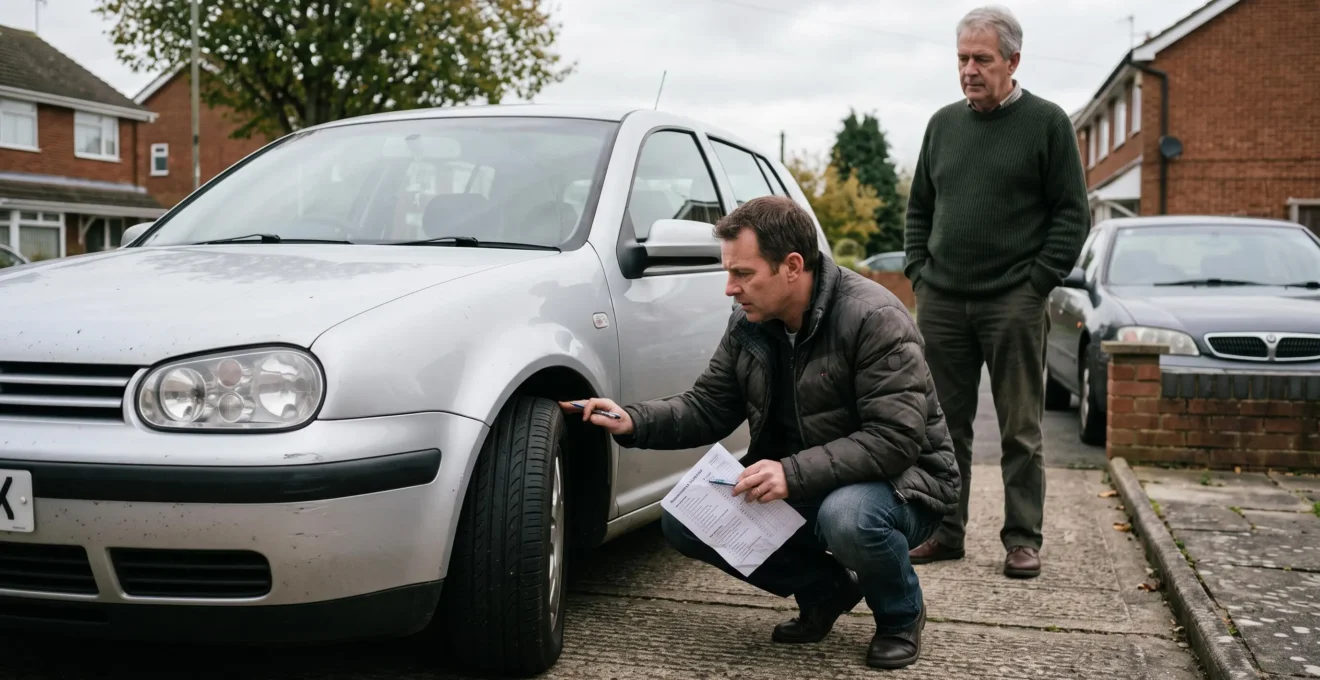
The right vehicle is not necessarily the cheapest, newest or most powerful. It is the one that handles your regular journeys comfortably, meets your practical requirements and remains affordable throughout the time you own it.
A car that looks inexpensive on a dealership forecourt can become costly through depreciation, insurance, fuel consumption and unexpected repairs. Conversely, a slightly more expensive vehicle with predictable maintenance requirements may prove more economical over several years.
Choosing effectively starts with understanding how you actually drive. Your weekly mileage, passenger requirements, available parking, typical journey lengths and access to charging or refuelling facilities should influence the decision before appearance or advertised specifications.
The same principle applies to new and used vehicles, different powertrains and cars with varying mileage. A systematic comparison helps separate essential requirements from occasional preferences, while leaving room for the unexpected expenses that accompany ownership.
Choosing a car that genuinely fits your needs
- Calculate total ownership costs, including depreciation, insurance, energy, maintenance and expected resale value, instead of comparing purchase prices alone.
- Build your shortlist around your normal weekly driving, using occasional long journeys or special requirements as secondary considerations unless they are essential.
- Evaluate condition, maintenance history and independent inspection results before buying, and be prepared to reject a vehicle that fails your non-negotiable criteria.
- Why Can the Cheapest Car Be More Expensive to Own Long Term?
- How Can You Shortlist Cars Based on Your Actual Weekly Driving?
- New or Used Car: Which Makes More Sense for Your Budget and Mileage?
- Which Warning Signs Should Stop You Buying a Used Vehicle?
- When Should You Walk Away and Keep Looking for Another Car?
- Why Can a Well-Maintained Higher-Mileage Car Be a Better Long-Term Buy?
- Petrol, Hybrid or EV: Which Offers the Most Practical Range for Long Trips?
- How Can a Car Become a Lasting Investment Rather Than a Short-Lived Expense?
Why Can the Cheapest Car Be More Expensive to Own Long Term?
The cheapest car can become the most expensive because its purchase price represents only one part of ownership. Depreciation, insurance, fuel, servicing, repairs and financing charges all affect the final cost. A vehicle with a higher asking price may ultimately cost less if it retains value better, needs fewer expensive repairs or consumes less energy.
To compare two vehicles fairly, calculate their estimated total cost of ownership over the same period and distance. Include the expected selling price at the end, rather than treating the original purchase price as money permanently lost.
A practical calculation is:
Total ownership cost = purchase price − expected resale value + financing charges + insurance + taxes and registration + fuel or electricity + servicing + repairs + tyres.
For an annual or per-mile comparison, divide that total by the years or distance you expect to keep the car. Use local insurance quotes, energy prices and service estimates rather than national averages whenever possible.
$12,863 per year
Estimated average annual ownership and operating cost for a new vehicle in the United States, based on a five-year, 75,000-mile ownership period. The modeled weighted average annual depreciation was $4,422. These figures represent selected new vehicles, not an individual buyer’s guaranteed expenses.
Maintenance costs also depend on the specific model. An inexpensive vehicle with limited local parts availability, complicated specialist components or few qualified repairers may be less economical than a mainstream alternative. However, rarity alone does not prove that a car will be expensive to maintain.
Before buying, request prices for routine servicing, brake components, tyres and known age-related repairs. Check whether independent garages can work on the model and whether commonly needed parts are readily available.
Depreciation deserves particular attention for newer cars. A vehicle may lose a substantial share of its value during its early years, but resale values do not decline at a constant rate. Demand, condition, model reputation and the wider market can change its depreciation pattern.
Keeping a vehicle longer can spread its initial depreciation over more years, although rising repair costs may eventually offset that advantage.
Once the realistic ownership budget is established, the next step is identifying which vehicles actually suit the journeys that budget needs to support.
How Can You Shortlist Cars Based on Your Actual Weekly Driving?
Shortlist cars by recording a representative week of driving and identifying the requirements that occur repeatedly. Daily distances, passenger numbers, luggage, parking restrictions and access to fuel or charging should determine your essential criteria. Occasional activities matter, but they should not automatically dictate the size, power or price of a vehicle used mainly for ordinary journeys.
Start with a simple driving diary. Record each journey’s distance, purpose, passenger load and cargo requirements. Include the longest regular journey, not just the average commute. Note whether you park on narrow streets, use a garage, travel on rough roads or regularly encounter heavy traffic.
Translate those observations into non-negotiable filters. A household that regularly carries three children may need a particular seating configuration and enough space for child restraints. A driver using a compact urban parking space needs manageable exterior dimensions. Someone who frequently transports equipment should assess usable cargo dimensions rather than boot capacity alone.
Next, separate routine needs from aspirational scenarios. A buyer who imagines towing a trailer or exploring remote roads may otherwise spend more on a large vehicle whose additional capability is rarely used. For occasional exceptional journeys, renting a suitable vehicle could be more economical, provided the practical arrangements work.
As a useful starting heuristic, choose around the journeys that account for roughly 90% of your actual use, then check whether the remaining journeys create any genuine deal-breakers. This is a planning method, not a statistical threshold or reason to ignore essential safety and capacity requirements.
The following decision grid helps compare candidates. Use it only after removing vehicles that fail an essential requirement.
| Criterion | What to assess | Decision rule |
|---|---|---|
| Everyday suitability | Seating, access, cargo capacity and parking dimensions | Must meet frequent needs without compromise |
| Running costs | Insurance, energy, servicing and expected repairs | Must remain within the ownership budget |
| Journey capability | Range, comfort, luggage and required special capabilities | Must cover essential journeys realistically |
| Ownership practicality | Parts, repair access, charging and service history | Must be manageable in the buyer’s location |
Score each surviving vehicle consistently, such as from one to five for each criterion, with greater weight on everyday suitability and ownership costs. A score is a comparison aid, not a substitute for inspecting the actual car.
With a practical shortlist in place, the choice between new and used becomes easier to evaluate against your expected mileage and ownership horizon.
New or Used Car: Which Makes More Sense for Your Budget and Mileage?
A new car may suit buyers who value predictable early maintenance, current technology and comprehensive manufacturer warranty coverage. A used car may offer better value by avoiding some initial depreciation. The stronger option depends on annual mileage, how long you intend to keep the vehicle, current market prices and your ability to absorb unexpected repairs.
Annual mileage affects the calculation in different ways. Someone covering substantial distances will accumulate wear quickly, regardless of whether the vehicle was purchased new. A carefully selected used car can avoid paying for the newest vehicle’s initial depreciation, but its remaining service life and major maintenance needs must be assessed.
A lower-mileage driver planning to keep a car for many years may place more value on a new vehicle’s warranty, known ownership history and predictable early servicing. That does not automatically make it cheaper: depreciation and financing can still dominate the budget.
Warranty terms are another important distinction. A new manufacturer’s warranty typically protects against specified defects under stated conditions, but it does not mean every future expense is covered. Tyres, brake wear, accidental damage and maintenance items may be excluded. Coverage for batteries, emissions systems, electronics and other components varies by manufacturer, market and contract.
Used vehicles may retain some manufacturer warranty, include a separate dealer warranty or be sold with limited contractual protection. The precise legal position depends on the country, type of seller and applicable consumer protections.
For each option, obtain the actual warranty documentation and determine what the buyer would pay if an expensive component failed outside coverage.
Market conditions can also narrow the traditional price advantage of used cars. If demand is high and relatively recent used models are priced close to new equivalents, a new vehicle may deserve consideration, particularly when warranty coverage or financing terms differ substantially.
Compare actual transaction offers for similar specifications, including taxes, registration, delivery charges, financing and expected resale values. Do not assume used is always cheaper or new is always safer.
If a used vehicle offers the stronger financial case, its individual condition becomes more important than the general reputation of its model.
Which Warning Signs Should Stop You Buying a Used Vehicle?
A used vehicle should raise serious concern when its physical condition conflicts with its advertised history, especially if there are signs of flooding, structural damage, unexplained mileage discrepancies or missing ownership documents. These signs do not always prove a defect, but they justify further investigation. A satisfactory history report alone cannot replace an independent mechanical inspection.
Begin with the areas that can reveal concealed damage. Look beneath floor mats, inside the boot and around concealed interior trim for unusual corrosion, mud residue, moisture staining or persistent musty smells. Condensation inside lamps can have multiple causes, but repeated moisture intrusion deserves attention.
The NHTSA guidance on flood-damaged vehicles explains that water-damaged cars can return to the market after cleaning and that problems may appear later. A clean title or registration record does not conclusively rule out previous flooding.
Other warning signs include inconsistent paint finishes, uneven panel gaps, overspray or mismatched bodywork. Such findings may indicate previous repairs, though their significance depends on the quality and nature of the work. Uneven tyre wear can suggest alignment, suspension or inflation issues; it does not automatically establish structural damage.
Compare service invoices with recorded mileage, dates and the seller’s account. Verify the vehicle identification number against its documentation and available history records. A report may identify accidents, mileage entries, ownership changes or title problems, but its usefulness depends on the records available in the relevant country.
An independent mechanic can examine the vehicle’s mechanical condition, identify accessible signs of earlier repairs and provide an estimate for necessary work. The inspection may uncover expensive engine, transmission or suspension problems that are not evident during a short test drive.
However, even a thorough inspection cannot guarantee freedom from hidden defects or predict every future breakdown. Its value lies in reducing uncertainty before committing to a purchase.
The FTC advice on buying a used car from a dealer recommends obtaining both a vehicle history report and an independent inspection. Its specific dealer and warranty guidance concerns the United States; buyers elsewhere should check the equivalent local requirements.
Five checks to complete before buying a used car
- Match the vehicle identification number with the registration and available ownership records. Keep a record of the identifiers checked and any discrepancy.
- Review the vehicle history and compare its mileage entries with dated service invoices. Produce a short timeline showing any unexplained gaps.
- Inspect the interior, body panels, tyres and visible underbody areas for warning signs. Record photographs and descriptions of anything requiring investigation.
- Arrange an independent pre-purchase inspection and request a written assessment with estimated repair costs.
- Review the final selling price, warranty terms, inspection findings and outstanding concerns. Complete a written buy, renegotiate or reject decision.
Some concerns can be resolved with documentation or repairs, while others create sufficient uncertainty to justify leaving the negotiation entirely.
When Should You Walk Away and Keep Looking for Another Car?
Walk away when the seller cannot establish trustworthy ownership, refuses reasonable verification, conceals important information or pressures you to commit before completing essential checks. Serious structural or safety concerns without satisfactory evidence of repair are also grounds to reject a vehicle. A discount should never compensate for unresolved risks you cannot assess or afford.
The clearest warning signs involve the buying process itself. Artificial deadlines, sudden changes to agreed terms, inconsistent paperwork and reluctance to answer straightforward questions make it difficult to evaluate the transaction fairly.
A seller who prevents a reasonable independent inspection is another significant concern. Practical restrictions sometimes require an inspection at the seller’s premises rather than moving the car elsewhere. If an acceptable alternative cannot be arranged, continuing the search may be safer.
Emotional pressure can be equally influential. After several weeks of researching models, contacting sellers and travelling to view cars, buyers may begin relaxing their standards simply to finish the process. The time already spent searching is a sunk cost: it cannot justify taking on new financial or safety risks.
Write your non-negotiable criteria before visiting a seller. These might include verified ownership, an acceptable inspection, a maximum total price, suitable passenger capacity and the absence of unexplained serious damage.
Not every problem requires permanent rejection, however. A worn tyre, overdue routine service or minor cosmetic defect may be manageable when the issue is properly assessed, the repair cost is known and the selling price reflects it.
Distinguish a negotiable defect from an unresolved fundamental risk. The former can be quantified and repaired. The latter involves uncertain safety, legitimacy or potentially extensive hidden costs.
A practical pause means requesting further evidence, obtaining a specialist opinion or recalculating the deal without paying a non-refundable commitment first. Rejecting the car becomes appropriate when essential uncertainty cannot be resolved satisfactorily.
When assessing another candidate, remember that a higher odometer reading need not be an automatic reason for rejection if the vehicle’s condition and maintenance history are substantially stronger.
Why Can a Well-Maintained Higher-Mileage Car Be a Better Long-Term Buy?
A well-maintained higher-mileage car can offer better long-term value because its service history, mechanical condition and purchase price may outweigh the disadvantage of additional distance travelled. A lower-mileage example is not automatically more reliable, particularly if it has incomplete maintenance records or has spent much of its life making short journeys.
Mileage indicates use, but it does not explain how that use occurred. A car driven regularly on open roads may have experienced fewer cold starts, gear changes and braking events per mile than one used predominantly for short urban trips.
That distinction is meaningful but not absolute. Highway driving still accumulates wear on tyres, suspension, bearings and other components. City use can be demanding on braking systems and transmissions, while repeated cold starts may prevent some systems from consistently reaching their intended operating temperatures.
Service history helps put these conditions into context. Look for dated invoices showing oil changes, manufacturer-specified maintenance, brake work, cooling-system attention and repairs to known wear components. A stamped service book is useful, but supporting invoices can provide greater detail about completed work.
Ask whether maintenance was carried out according to the vehicle’s actual operating conditions. A high-mileage vehicle serviced consistently may compare favourably with a lower-mileage alternative that has missed important maintenance intervals.
Driving patterns cannot be verified reliably from mileage alone. Service frequency, wear observations and consistent seller explanations can provide clues, but an independent inspection remains necessary.
Higher mileage may also reduce a vehicle’s market price, creating an opportunity to buy a sound example for less than a comparable low-mileage car. The potential saving must be balanced against major maintenance approaching on the manufacturer’s schedule.
Check the specific model’s requirements for timing belts or chains, transmission servicing, cooling components, suspension parts and other age-related items. Not all vehicles use the same components or follow equivalent service intervals.
A sound comparison adds the price of immediately necessary and reasonably foreseeable maintenance to the asking price. If the combined figure remains favourable, the higher-mileage vehicle may be a sensible choice.
After confirming mechanical suitability, the vehicle’s powertrain should also be evaluated against the buyer’s most demanding regular journeys.
Petrol, Hybrid or EV: Which Offers the Most Practical Range for Long Trips?
Petrol vehicles and conventional hybrids usually offer straightforward long-distance travel where refuelling stations are readily available. Electric vehicles can also cover long journeys comfortably, but their practicality depends on usable range, charging infrastructure, charging speed and travel conditions. The best choice is the powertrain that accommodates your actual routes without unacceptable cost, delay or inconvenience.
Advertised range is only the starting point. Driving speed, weather, passenger loads, terrain and energy consumption can change the distance available before refuelling or charging.
Petrol cars benefit from established refuelling infrastructure in many markets, although availability varies in remote areas. Conventional, non-plug-in hybrids combine a combustion engine with electric assistance and generally refuel like petrol vehicles, avoiding the need to plan external charging stops.
Hybrids are not identical, however. Their efficiency benefits depend on the design and driving conditions. Some conventional hybrids offer particularly useful efficiency in stop-start traffic, while their advantage on sustained high-speed journeys may be smaller. Plug-in hybrids introduce a different calculation because their benefits depend partly on charging habits.
Battery-electric vehicles can provide low energy costs when charged economically at home. However, motorway consumption and the price of public rapid charging can materially change long-trip costs.
The U.S. Department of Energy‘s information on electric-vehicle range identifies extreme temperatures, higher speeds, heavy loads and steep climbs as factors affecting available driving distance.
The practical issue is therefore not whether an EV can complete a particular journey under ideal conditions. It is whether the journey remains convenient in the conditions you actually encounter.
Compare the three options across long-distance requirements rather than relying on a single range figure.
| Consideration | Petrol | Conventional hybrid | Battery-electric vehicle |
|---|---|---|---|
| Energy stops | Conventional refuelling | Conventional refuelling | Charging stops where necessary |
| Route planning | Usually limited in well-served areas | Usually limited in well-served areas | Depends on range and charger availability |
| Cold-weather considerations | Fuel economy and operating conditions vary | Efficiency varies with conditions | Cabin heating and battery conditions can reduce range |
| Running-cost advantage | Depends on fuel price and efficiency | Potential fuel savings, particularly in suitable driving conditions | Potentially lower energy costs with affordable home charging |
For a useful real-world test, map three to five of your longest typical journeys. Identify suitable charging locations, connector compatibility, possible waiting times and how long charging would add under realistic conditions. Consider a contingency if a charger is occupied or unavailable.
Also check how frequently those journeys occur. An EV might fit a household’s daily use extremely well even if occasional long trips require more planning. Conversely, a driver regularly covering routes with limited reliable charging may reasonably prefer petrol or a conventional hybrid.
The vehicle that handles regular journeys reliably and affordably is also more likely to remain useful long enough to justify the original purchase.
Key takeaways for long-term ownership
- Evaluate a vehicle over the years you intend to keep it, including resale value and the repairs it may require along the way.
- Prioritise documented maintenance, reliable parts availability and practical features that will remain useful as circumstances change.
- Choose a car whose foreseeable maintenance and operating costs fit the household budget without depending on optimistic resale or repair assumptions.
How Can a Car Become a Lasting Investment Rather Than a Short-Lived Expense?
A car becomes a better long-term financial decision when it delivers dependable transport at a manageable lifetime cost. Most ordinary vehicles depreciate, so the objective is not financial appreciation but lower ownership cost per mile or kilometre. Careful model selection, preventive maintenance and a realistic holding period can make a car a durable household asset rather than an expensive cycle of replacements.
The word investment should be used carefully. Collectible vehicles can sometimes appreciate, but that is exceptional and does not provide a sound basis for ordinary transport decisions. A typical family car should instead be judged by the useful service it provides relative to its total cost.
Holding a vehicle longer can reduce the frequency of transaction costs, initial depreciation and replacement expenses. However, there is no universally optimal ownership period. The point at which replacement makes sense depends on increasing maintenance costs, reliability, changing needs and the value of available alternatives.
Preventive maintenance is central to extending useful service life. Follow the manufacturer-specified maintenance schedule, account for severe-use conditions when relevant and address developing faults before they cause additional damage.
Keep invoices, inspection records and receipts organised. Documentation helps establish what has been done, supports future diagnosis and gives prospective buyers better evidence of the vehicle’s condition. It may support resale value, although no particular financial return is guaranteed.
Vehicle choice also affects how practical long-term ownership becomes. Established parts availability, access to competent mechanics and mechanical complexity appropriate to the owner’s maintenance resources can reduce the risk of an otherwise serviceable car becoming uneconomical to repair.
Choose enduring practicality rather than features that satisfy only immediate preferences. Adequate passenger space, usable cargo capacity, suitable safety equipment and manageable operating costs make a vehicle more adaptable as household circumstances evolve.
For a long-term budget, track expenditure annually rather than waiting until sale. Record maintenance, insurance, fuel or electricity, tyres, repairs and other relevant expenses. Compare the accumulated cost with distance travelled and reassess whether the vehicle continues to meet essential requirements.
This approach does not mean keeping every car indefinitely. Repeated major failures, unresolved safety concerns or changing transport needs can make replacement the more sensible decision.
Start by recording your regular journeys, setting a total ownership budget and comparing a small number of suitable vehicles. Then verify the condition, likely maintenance requirements and practical limitations of each candidate. Buy only when the evidence supports both the vehicle’s suitability today and your ability to keep it affordable in the years ahead.
How much money should you keep aside after buying a car?
Keep a separate allowance for insurance, registration, initial maintenance, tyres and unexpected repairs. The appropriate amount depends on the vehicle’s age, condition, warranty coverage and local repair costs. Obtain estimates for the actual model and use inspection findings to build a realistic reserve rather than relying on a universal percentage of the purchase price.
Should you prioritise vehicle reliability or fuel economy?
Neither should be evaluated in isolation. A fuel-efficient car may still be expensive if it has costly maintenance requirements, while a reliable vehicle with high energy consumption may become expensive at substantial annual mileage. Compare expected fuel or electricity spending with servicing, repairs, depreciation and insurance over the same ownership period.
Is it better to buy a smaller car if you rarely carry passengers?
A smaller car may be more practical when journeys are mainly solo or involve one passenger, especially where parking space is limited. However, compare actual cabin space, driving comfort, safety equipment and running costs rather than assuming all smaller vehicles are cheaper or better suited to your needs. Occasional essential passenger or cargo requirements should still be accommodated.
Can a vehicle history report guarantee a used car has never been damaged?
No. Vehicle history reports depend on the information recorded and made available to the reporting provider. Accidents, flood exposure or mechanical problems may be missing. A history check should therefore be combined with document verification, a physical examination and an independent mechanical inspection. A clean report reduces some uncertainty but does not establish that a vehicle is defect-free.
When should you replace a car that still runs well?
Consider replacement when the vehicle no longer meets essential transport needs, becomes difficult to maintain safely or develops recurring costs that make a suitable alternative more economical. Compare the expected costs of retaining it with the purchase, depreciation, insurance and operating costs of its replacement. Age alone is not a sufficient reason to replace a serviceable vehicle.